The Mojave Desert Tortoise: A Rare, Protected Neighbor
Most visitors to the Mojave Desert never see a wild tortoise. They move quietly, blend into the gravel, and spend most of the year resting underground. But on clear spring mornings after a rain, our crew at Adrenaline Mountain sometimes spots a mojave desert tortoise moving through the hills near Goodsprings. Finding one on the landscape is a special treat that reminds us how resilient desert life can be.
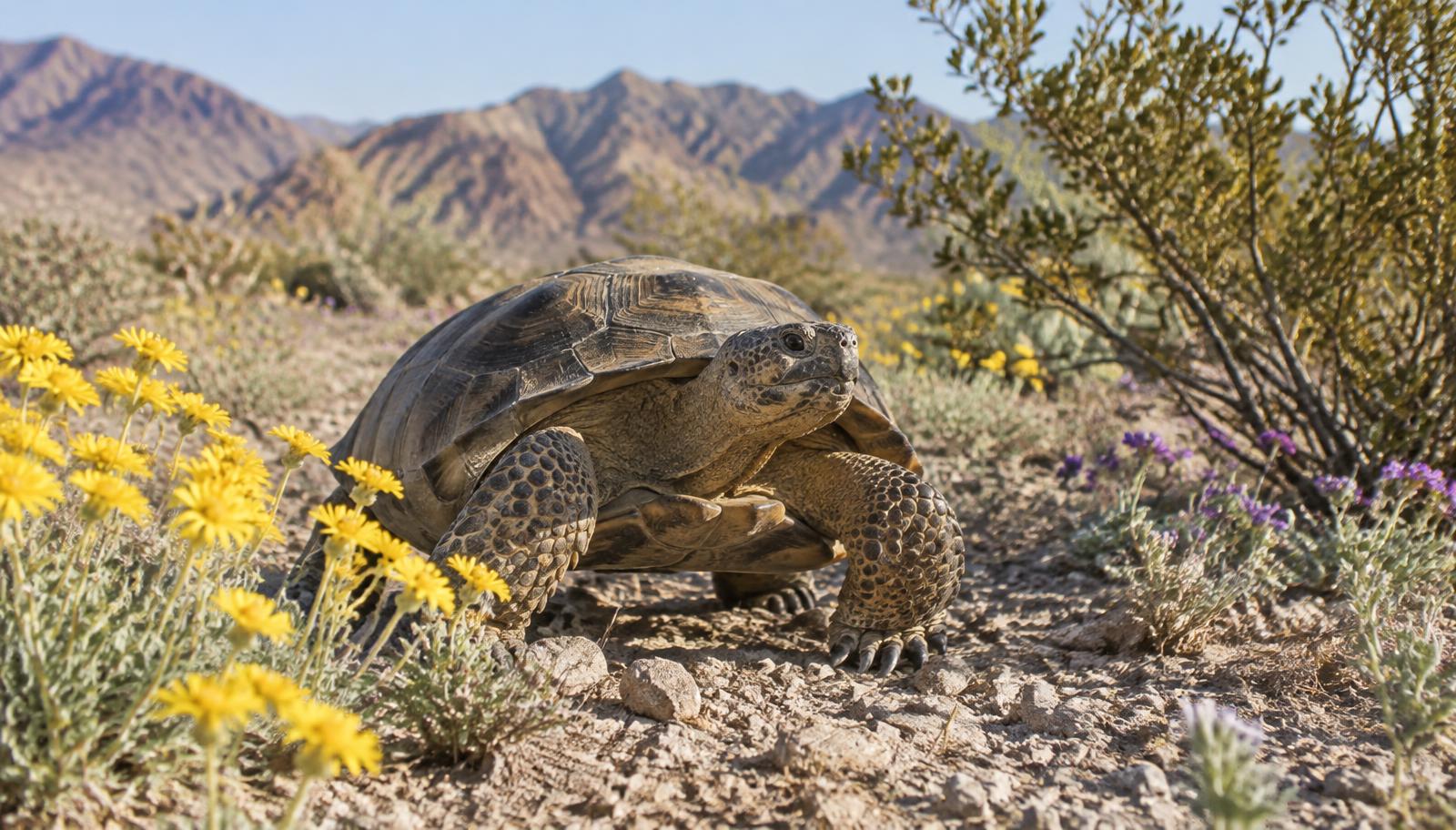
!A Mojave desert tortoise among spring wildflowers
What is the Mojave desert tortoise?
The mojave desert tortoise (Gopherus agassizii) is a terrestrial reptile native to the arid valleys and rocky foothills north and west of the Colorado River. It survives extreme temperature shifts by spending up to nine months each year inside deep underground burrows. The species is built for drought, capable of storing water in its bladder for up to a full year while feeding on desert vegetation.
These gentle reptiles are unique to the desert southwest. They inhabit southern Nevada, southeastern California, southwestern Utah, and northwestern Arizona. They do not swim or live in water. Instead, they make their homes in dry washes, bajadas, canyon bottoms, and open creosote flats where the soil allows them to dig.
Physical traits and desert survival
The shell of an adult tortoise measures between 8 and 15 inches long. Their high-domed carapace ranges from dull brown to olive-gray. This neutral color helps them blend directly into desert soil and rocks. Thick, scaly front legs act like shovels, allowing them to dig extensive burrows in packed gravel.
Water storage is the tortoise's ultimate survival tool. A tortoise can hold water in its urinary bladder for months at a time. It reabsorbs this moisture during dry spells when rain does not fall. Because this water is critical to survival, any sudden scare can cause the tortoise to empty its bladder. Losing that moisture can be fatal during hot weather, which is why humans must never handle them.
Daily diet and seasonal activity
Tortoises are strictly plant eaters. In spring, they feed heavily on grasses, blooming wildflowers, and native stems, including the seasonal growth of Mojave plants. They also eat cactus pads and fruit when available. This moisture-rich forage gives them the calories and hydration they need before summer heat sets in.
Tortoise activity peaks in two clear windows each year:
Spring (March through June): Adults emerge from burrows to feed, drink from puddles after rainfall, and find mates.
Late summer to fall (September and October): Tortoises feed again before cold weather arrives and hatchlings emerge from nests.
Winter (November through February): Tortoises enter brumation, a state of dormancy, deep below the frost line.
Mid-summer (July and August): During the hottest days, tortoises stay underground to escape ground temperatures that can exceed 130 degrees Fahrenheit.
!A desert tortoise resting at its burrow under a creosote bush
Why is the Mojave desert tortoise listed as threatened?
The Mojave desert tortoise was listed as threatened under the federal Endangered Species Act in 1990 due to rapid population declines. Habitat loss from human development, road mortality, raven predation on juvenile shells, and respiratory diseases have made survival difficult across its historical range. Because tortoises take between 13 and 20 years to reach breeding age, populations recover very slowly from losses.
State and federal agencies work together to monitor remaining populations. In Clark County, Nevada, the Desert Conservation Program helps protect wild habitat through the Multiple Species Habitat Conservation Plan. This plan balances urban growth in Las Vegas with open-space reserves in surrounding valleys.
Primary threats to wild populations
Several factors make life hard for wild tortoises across the Mojave Desert:
Habitat fragmentation: Roads, power lines, and housing developments break large desert tracts into small patches. Tortoises cross roads to find forage and often get hit by moving traffic.
Predation by ravens: Common raven populations have expanded near human trash sites and utility poles. Ravens have sharp beaks that easily puncture the soft shells of young tortoises under five years of age.
Invasive plant species: Invasive grasses like red brome crowd out nutritious native wildflowers. These weeds also fuel fast-moving wildfires that burn desert scrub that took centuries to grow.
Upper respiratory tract disease: This contagious disease spreads easily among stressed tortoises and can wipe out local colonies.
What should you do if you see a desert tortoise in the wild?
If you see a wild tortoise, stop moving, keep your distance, and take photos using a zoom lens without getting close. You should never touch, pick up, block, or feed the animal under any circumstances. Touching a tortoise can cause it to release its stored bladder water in defense, which often leads to lethal dehydration in the desert heat.
Federal and Nevada state laws make it illegal to harass, harm, capture, or collect a wild desert tortoise. Fines for disturbing them can be steep. Respecting their space ensures they can continue foraging and navigating their home range undisturbed.
Follow these basic guidelines whenever you explore the desert:
Keep a 15-foot buffer: Give the tortoise plenty of room so it does not feel trapped or threatened.
Check beneath parked vehicles: Tortoises seek shade under hot sun. Always walk around your truck or vehicle and look beneath tires before starting your engine.
Never leave food and water behind: Wild tortoises know how to find natural forage. Human food causes digestive failure, and standing water trays disrupt natural habits.
Keep dogs leashed: Pet dogs can easily injure or stress a tortoise. Always maintain direct leash control over pets in the backcountry.
Never release captive pets: Pet tortoises often carry respiratory illnesses. Releasing a captive tortoise into the desert can spread sickness and kill wild populations.
Where does the Mojave desert tortoise live in Nevada?
In Nevada, the mojave desert tortoise lives exclusively across the southern tip of the state, primarily within Clark, Lincoln, and Nye counties. You can find their burrows in creosote bush scrub, Joshua tree woodlands, and desert wash systems below 4,500 feet in elevation. The Ivanpah Valley, Eldorado Valley, and hills around Goodsprings provide important habitat networks for these animals.
Because tortoises live where people enjoy outdoor recreation, trail users must stay on established routes. When we operate offroad tours in our custom Can-Am Maverick vehicles, we instruct all drivers to stick to designated trails. Staying on established trails protects delicate burrow systems from collapse. Burrow collapse is dangerous because a tortoise trapped beneath collapsed soil cannot escape.
Visitors traveling south on Interstate 15 toward our facility will pass through natural tortoise country. For detailed travel routes and check-in times, consult our directions page before heading out from Las Vegas.
How does desert recreation protect native wildlife?
Responsible recreation protects desert wildlife by confining human activity to controlled trails, ranges, and facilities while preserving surrounding open land. Professional tour operators educate visitors on desert safety and environmental rules before anyone heads outdoors. By teaching thousands of visitors how to respect desert habitats, operators help turn tourists into responsible desert advocates.
At our private property near the historic Yellow Pine Mine, we balance outdoor adventures with land stewardship. Whether guests visit our outdoor shooting range or book multi-activity combos, we emphasize respect for local terrain. We ensure our team knows the signs of tortoise activity and monitors access roads closely.
Guests interested in learning more about the history and landscape of our private desert property can read our about page. If you have questions about what to wear or what to expect in the desert, check out our helpful faq page before your trip.
Curious about the other wildlife and history out here? Read about the wild horses and burros near Goodsprings and discover the deep heritage of the Southern Nevada Mojave Desert.
Photos in this article are artist's illustrations.
Sources
U.S. Fish & Wildlife Service, "Desert Tortoise (Gopherus agassizii)"
U.S. Geological Survey, "Desert Tortoise Ecology"
Clark County Desert Conservation Program, "Multiple Species Habitat Conservation Plan"
Tortoise Group, "tortoisegroup.org"
