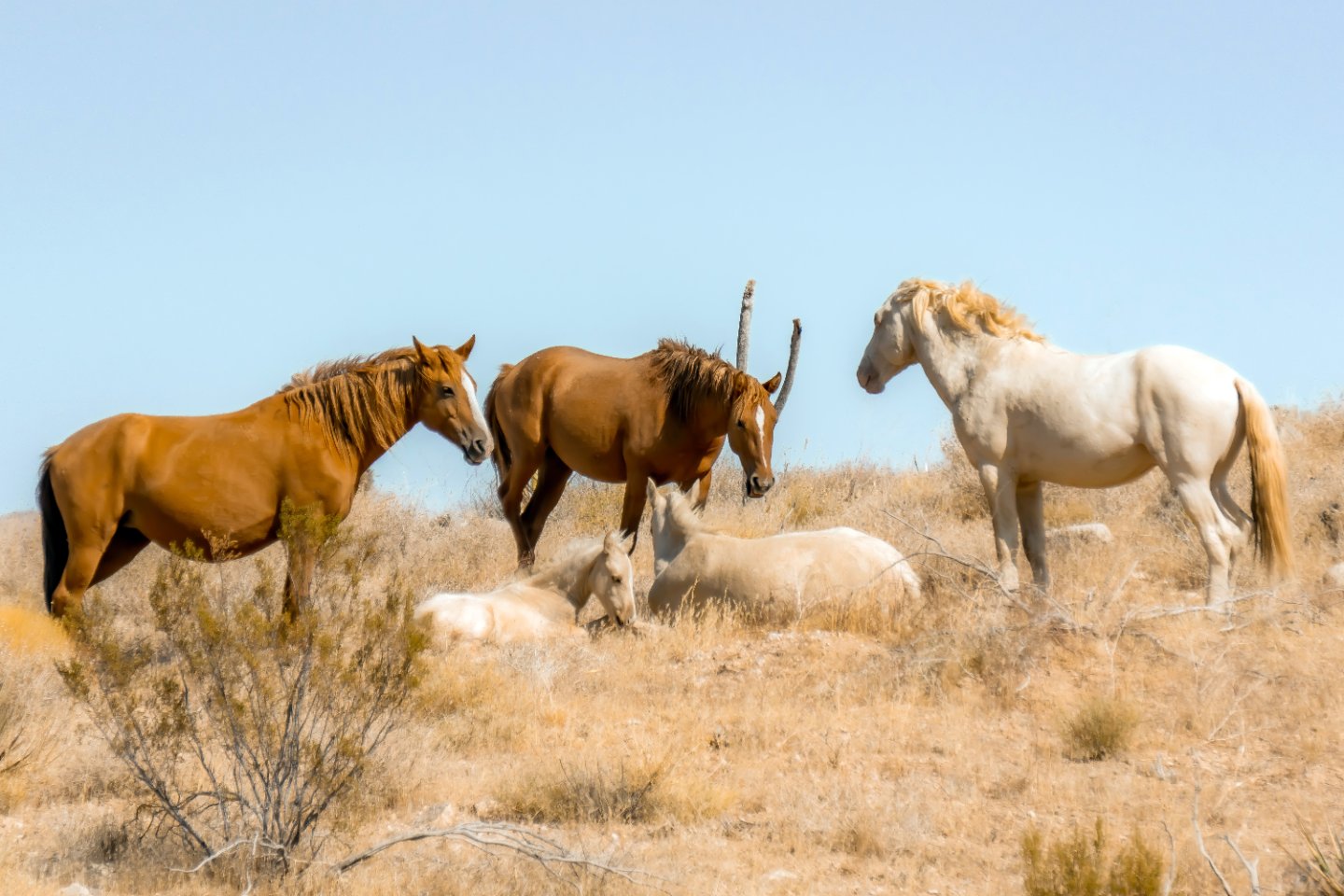
Wild Horses in the Mojave Desert: Guide to Nevada Herds
Drive the quiet gravel back roads around Goodsprings at sunrise, and you may spot a scene straight out of an old frontier painting. A small band of wild horses in the Mojave Desert moves quietly among mature Joshua trees, or a pair of wild burros watches your vehicle from a limestone wash. These hardy animals are iconic residents of southern Nevada. While sightings are never guaranteed, travelers exploring the rugged desert terrain southwest of Las Vegas frequently share the landscape with these living symbols of American Western heritage.
Where can you see wild horses in the Mojave Desert?
Wild horses in the Mojave Desert roam the foothills and basins of the Spring Mountains, located about 20 miles west of the Las Vegas Strip. The primary public viewing areas include the Red Rock Herd Management Area, the flats along State Route 160 toward Pahrump, and the back roads between Mountain Springs and Goodsprings. These animals follow natural seasonal forage and water sources, so they move between high-elevation pinyon-juniper zones in the heat of summer and low-elevation desert basins during winter and early spring.
The Bureau of Land Management oversees public lands in Nevada, where the majority of America's free-roaming wild horses and burros live. Just outside the city limits, public land gives way to wide mountain vistas. To find them, look across broad alluvial fans where natural washes feed native grasses and saltbush.
Red Rock Herd Management Area
The Red Rock Herd Management Area spans approximately 161,969 acres of public land. It begins roughly 20 miles west of Las Vegas and covers the eastern slopes of the Spring Mountains. In this area, elevations climb from desert scrub flats at 3,000 feet up to pine-covered slopes above 8,000 feet. Wild burros tend to linger in shaded ravines and rocky canyons, while wild horse bands prefer broad valleys and open tablelands where they can run if threatened.
Wheeler Pass Herd Management Area
Northwest of Red Rock Canyon, the Wheeler Pass Herd Management Area covers rugged terrain that bridges Clark and Nye counties. Wild mustangs in Wheeler Pass navigate steeper ridges and mountain passes toward Pahrump. Spring meltwater and high-elevation seeps sustain these bands. Because vehicle access requires sturdy high-clearance vehicles, these horses experience less human contact than herds closer to the highway corridor.
Johnnie Herd Management Area
The Johnnie Herd Management Area spans about 179,368 acres northwest of the Spring Mountains. Federal managers maintain this territory primarily for wild burros rather than horses, setting an Appropriate Management Level of 65 to 108 burros. The landscape here is arid, rocky, and tough, making it an ideal home for burros that thrive on coarse shrubs.
How did wild horses arrive in the Mojave Desert?
Wild horses and burros are not native to modern North America. Spanish explorers introduced domestic horses to the continent in the 1500s. Over the centuries, escaped and released animals formed feral bands. Later, 19th-century ranchers, cavalry detachments, and prospectors brought work stock into southern Nevada. Mining outfits in the Yellow Pine Mining District near Goodsprings relied heavily on burros to haul ore and supplies. When mining claims ran dry, workers released their pack stock, and those resilient animals adapted quickly to the harsh desert.
Because the Mojave Desert features extreme heat, scarce water, and sharp limestone rocks, only the strongest animals survived. Generations of natural selection shaped these herds into sure-footed, drought-tolerant creatures. Today, their bloodlines reflect a mix of Spanish mustangs, ranch quarter horses, draft stock, and historic pack animals.
These herds adapted their daily schedules to desert survival. In midsummer, when ground temperatures easily exceed 110 degrees, bands rest in deep canyon shadows during peak daylight hours. They travel toward natural springs and seeps during the cooler hours of dusk, night, and dawn.
How does federal law protect wild horses in Nevada?
Congress passed the Wild Free-Roaming Horses and Burros Act in 1971 to protect wild equines on public lands. The law designates wild horses and burros as living symbols of the pioneer spirit of the West and mandates that the Bureau of Land Management maintain them in a thriving natural ecological balance. Federal law prohibits capturing, harassing, harming, or killing wild horses and burros across public ranges.
Managing herds in a dry desert presents constant ecological challenges. A wild horse drinks between 5 and 15 gallons of water per day, and a band can rapidly strip sensitive desert springs of vegetation if populations grow unchecked. Because natural apex predators like mountain lions are scarce, herd numbers can double every four to five years.
To preserve native plants, desert bighorn sheep, and protected wildlife like the desert tortoise, federal agencies periodically conduct gathers. In recent years, managers have used bait and water traps rather than helicopters to safely gather excess animals. Gathered horses and burros enter public adoption and care programs, allowing herds to remain balanced with fragile desert resources.
!Two wild burros in a rocky desert ravine
What is the difference between wild horses and wild burros?
Wild horses and wild burros differ significantly in size, social structure, and desert habitat preferences. Wild horses are larger, weigh between 800 and 1,000 pounds, and live in tightly bonded family bands led by a dominant stallion and lead mare. Wild burros are smaller, typically weighing 400 to 500 pounds, with distinct long ears, a light-colored muzzle, and a dark dorsal cross on their backs. Burros are loose social animals that often travel alone or in small, fluid groups.
Their physical adaptations match their preferred desert ground:
Wild horses: Prefer open valleys, broad mesas, and rolling foothills. They need frequent access to standing water and feed primarily on grasses. When danger approaches, their primary defense is flight across open ground.
Wild burros: Prefer steep, rocky canyons and broken hillsides. They descend from African wild asses, giving them higher tolerance for extreme heat and coarse forage. Burros digest woody brush, cacti, and desert shrubs that horses cannot eat.
Both species display remarkable spatial memory. They remember specific rock basins, hidden tinajas, and seasonal seeps across hundreds of square miles, returning to exact water sources year after year.
How can you view wild horses safely in the desert?
To view wild horses safely, maintain a buffer distance of at least 50 feet at all times. Never feed or pet them, as feeding makes animals associate roads with human handouts, leading to fatal vehicle collisions. Use telephoto lenses or binoculars to observe natural behaviors from your vehicle or from a designated pullout without altering their movements.
Keep these essential guidelines in mind whenever you explore wild horse territory in southern Nevada:
Stay at least 50 feet away: Stallions protect mares and foals aggressively. A sudden step toward a band can trigger defensive kicks or bites.
Never offer food or water: It is illegal to feed wild horses or burros in Clark County. Handouts damage their digestive systems and encourage animals to linger on blind highway curves.
Slow down at sunrise and sunset: Low light makes dark-coated horses and burros difficult to see against desert brush. Collisions on State Route 160 are common hazards.
Keep domestic dogs leashed: Dogs mimic predators and provoke defensive charges from wild stallions or protective burro jacks.
Stay on marked roads: Driving off-road crushes fragile desert crust and damages delicate native food sources.
What other wildlife shares this rugged desert habitat?
The Mojave Desert surrounding Goodsprings supports a surprisingly diverse community of desert animals alongside wild horses. Desert bighorn sheep inhabit the high limestone cliffs of the Spring Mountains, descending to water catchments in early morning. Jackrabbits, kit foxes, coyotes, and roadrunners patrol the valley floors beneath Joshua tree forests. During warm spring mornings, the federally protected Mojave desert tortoise emerges from deep subterranean burrows to feed on tender annual wildflowers.
To see this rugged terrain firsthand, visitors often combine local wildlife watching with backcountry recreation. Exploring private desert trails on an off-road tour in a Can-Am Maverick offers a close look at the exact wash systems, historic mining trails, and rocky ridges where wild herds travel. If you are planning an outdoor adventure southwest of Las Vegas, check our directions page to map out your route through historic Goodsprings and experience the wild open spaces of the Mojave Desert.
Sources
Bureau of Land Management, "Red Rock Herd Management Area," official public land resource files.
Bureau of Land Management, "Spring Mountains Complex Wild Horse and Burro Bait and Water Gather Announcement," Nevada State Office.
Wild Free-Roaming Horses and Burros Act of 1971, Public Law 92-195, 16 U.S.C. 1331-1340.
Nevada Department of Wildlife, wildlife interaction and range surveys for Clark and Nye counties.
