Mojave Desert Plants: A Field Guide to Southern Nevada Flora
Many travelers assume the desert is an empty gravel plain, but Mojave Desert plants create a vibrant, resilient ecosystem. From the iconic Joshua tree to aromatic creosote bushes and sharp barrel cacti, the terrain around Goodsprings is packed with botanical life. Native plants here survive freezing winter nights, blazing summer afternoons, and long droughts. When you explore the trails in Southern Nevada, understanding what grows along the hillsides transforms your view of this rugged landscape.
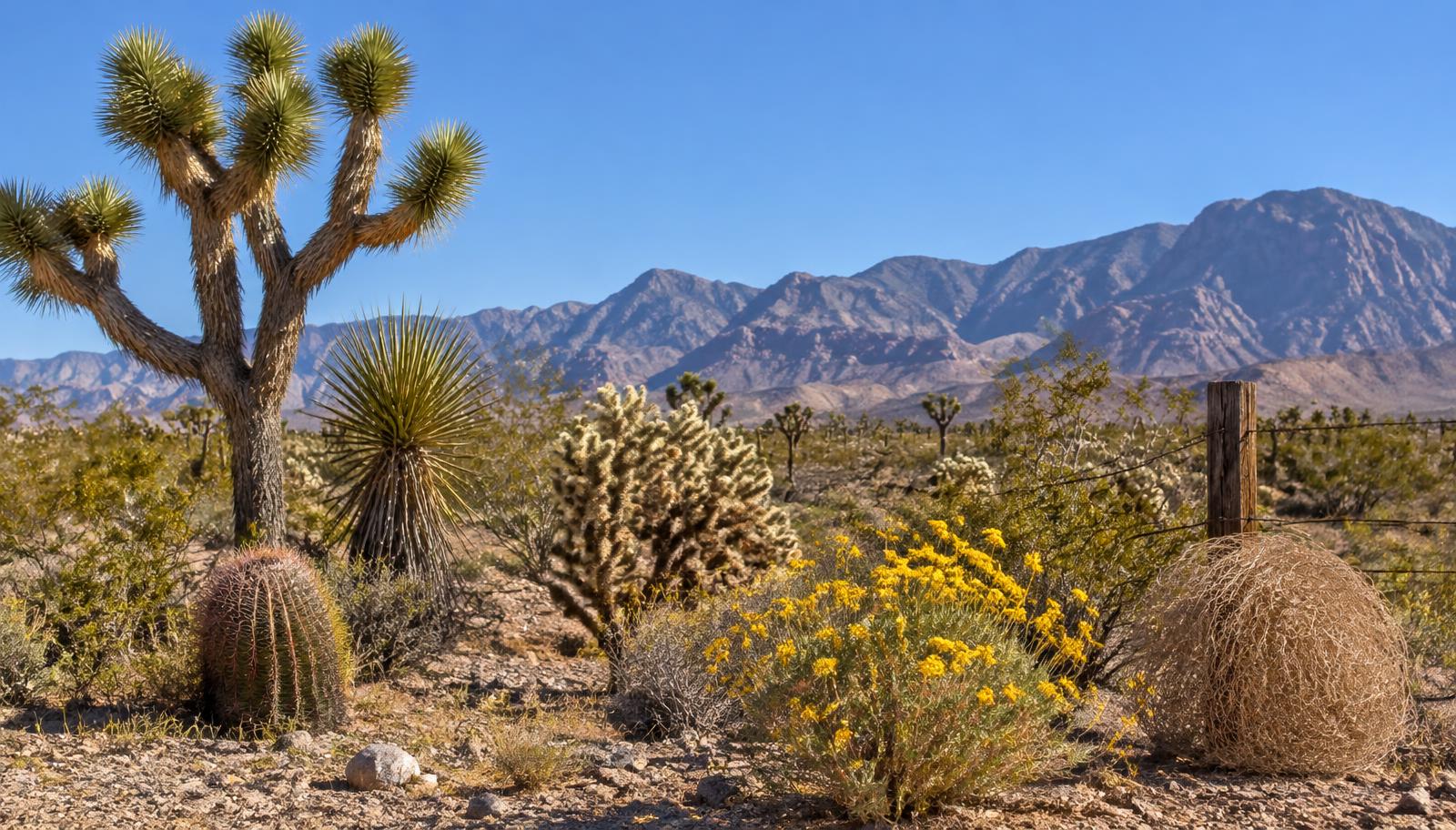
!Joshua tree, yucca, cholla, barrel cactus, brittlebush and a tumbleweed in the Mojave
What are the most common Mojave Desert plants?
The most common Mojave Desert plants include the Joshua tree, creosote bush, white bursage, Mojave yucca, and several varieties of cholla and barrel cactus. These hardy perennials have evolved deep taproots, waxy leaves, and succulent stems to store moisture during long dry spells. In springtime, seasonal wildflowers like desert marigolds and globemallow join these shrubs to create colorful displays across the rocky landscape.
Each plant fills a specific ecological niche. Nurse plants like the creosote bush protect younger seedlings from intense sun, wind, and grazing animals. Deep root networks anchor the loose ground against flash floods. Together, these species provide food and shelter for native wildlife, including bighorn sheep, jackrabbits, and the protected Mojave desert tortoise.
Joshua Trees and Native Yucca Species
The Joshua tree (Yucca brevifolia) stands as the premier symbol of the Mojave Desert. Despite its common name and tree-like shape, it is not a true woody tree. Instead, it is a giant monocot belonging to the yucca family. Legend says 19th-century Mormon pioneers named the plant because its twisted, upward-reaching branches resembled the biblical figure Joshua leading them forward. Joshua trees rely entirely on the tiny yucca moth for pollination, and in return, the moth lays its eggs inside the flower's ovary where larvae feed on a portion of the seeds.
Other notable yuccas grow alongside the Joshua tree:
- Mojave Yucca (Yucca schidigera): This species grows shorter and denser, featuring sharp, dagger-like leaves bordered by curling white fibers. Indigenous peoples utilized these fibers to weave sandals, ropes, nets, and sturdy baskets.
- Banana Yucca (Yucca baccata): Characterized by low rosettes and wide, fleshy leaves, this plant produces large, thick seed pods. Native groups roasted and ate the nutritious, sweet fruit as a dietary staple.
!Mojave yucca and cholla cactus at sunset
How do elevation zones change plant life in the Mojave Desert?
Elevation zones dictate which Mojave Desert plants thrive because temperatures drop and rainfall increases at higher altitudes. In Southern Nevada, life zones range from low salt flats below 2,400 feet up to pine forests above 6,000 feet. Creosote dominates lower elevations, Joshua trees thrive between 3,000 and 5,000 feet, and pinyon-juniper woodlands claim the high mountain slopes.
According to ecological data from federal conservation agencies, the transition between these bands happens rapidly as you climb out of valley floors:
- Saltbush Zone (below 2,400 feet): Salty, alkaline valley basins support saltbush and iodine bush, where standing water evaporates quickly.
- Creosote Bush Zone (2,400 to 3,600 feet): Open plains dominated by creosote and white bursage receive under 5 inches of annual rain.
- Joshua Tree Woodland (3,000 to 5,000 feet): Moderate slopes where Joshua trees grow alongside yuccas, cholla, and mixed grasses. The historic mining country of Goodsprings rests within this band.
- Blackbrush Zone (4,200 to 6,000 feet): Rocky hillsides blanketed by dark, dense blackbrush, Mormon tea, and buckhorn cholla.
- Pinyon-Juniper Zone (above 6,000 feet): Cool mountain ridges in the nearby Spring Mountains where Utah juniper and single-leaf pinyon pines flourish.
Cactus Varieties Along the Trails
Cacti represent some of the most specialized vegetation in the American Southwest. They store gallons of water inside spongy stems and protect their reserves behind sharp spines instead of wide leaves. Common cacti found along Southern Nevada trails include:
- Cholla Cactus: Silver cholla and buckhorn cholla feature segmented, cylindrical joints covered in dense, barbed spines. The joints break away easily when brushed, earning them the nickname "jumping cholla."
- Barrel Cactus: These ribbed, cylinder-shaped succulents grow up to several feet high. They feature heavy, curved spines and ring-like crowns of bright yellow flowers in late spring.
- Beavertail Cactus: A low-growing prickly pear relative with flat, grayish-blue pads. Instead of long spines, it carries tiny bristly glochids and yields brilliant magenta flowers during April.
- Hedgehog Cactus: These small, clumping cacti form low mounds and produce deep pink or crimson blooms early in the spring season.
Why does the desert smell after it rains?
The desert smells sweet and earthy after rain primarily because of the resin coating on creosote bush leaves (Larrea tridentata). When rare raindrops hit hot creosote leaves, they release aromatic oils and volatile organic compounds into the breeze. This familiar scent, known as petrichor, signals life and renewal throughout the entire Mojave ecosystem.
Creosote is remarkably durable. The resin seals in moisture during brutal summer heat, preventing water loss through evaporation. It also deters herbivores from chewing on the leaves. Individual creosote bushes clone themselves from central root systems. As older central stems die away, new rings of branches sprout outward. Scientists estimate that some creosote rings in the Mojave are more than 10,000 years old, placing them among the oldest living organisms on Earth.
Hardy Desert Shrubs and Wildflowers
Beyond creosote, an array of woody shrubs and seasonal wildflowers fill the rocky desert soils:
- White Bursage (Ambrosia dumosa): A low-slung, pale gray shrub that grows directly beside creosote across millions of desert acres.
- Mormon Tea (Ephedra nevadensis): Distinctive for its erect, jointed, bright green stems that lack true leaves. Early prospectors and pioneers brewed the stems into a stimulating hot tea.
- Brittlebush (Encelia farinosa): Clumps of rounded, powdery white leaves that push up long stalks of bright yellow daisy-like blooms every spring.
- Blackbrush (Coleogyne ramosissima): A tough, dark gray shrub that dominates transitional slopes below the juniper line.
When a wet winter delivers soaking rains, the seed bank dormant in the dry gravel bursts open. Wildflowers like desert gold, purple phacelia, lupine, and desert dandelions race through their life cycle in just a few short weeks. These blossoms carpet the desert floor before summer heat returns, providing vital nourishment to insects and native reptiles.
Where did tumbleweeds come from in the Mojave Desert?
Tumbleweeds are not native to the Mojave Desert or the American West. Most tumbleweeds are actually Russian thistle (Salsola tragus), an invasive weed accidentally imported from Eurasia in contaminated flax seed during the 1870s. After growing into a spiny green bush during summer, the plant dies, dries out, snaps at the base, and rolls in the wind to spread seeds.
A single tumbling Russian thistle can roll across miles of open desert, scattering tens of thousands of seeds along its route. While tumbleweeds have become an iconic cinematic symbol of western ghost towns, invasive weeds pose genuine threats to native plant communities. Species like Russian thistle, cheatgrass, and red brome crowd out indigenous seedlings, deplete soil nutrients, and create dense carpets of fine fuel that carry destructive wildfires across regions not adapted to frequent fire.
How can you see Mojave Desert plants up close near Las Vegas?
You can see Mojave Desert plants up close by exploring scenic off-road trail systems, state parks, and conservation areas just outside Las Vegas. Guided off-road tours through historic areas like the Yellow Pine Mining District let you traverse multiple elevation zones in a single afternoon. Riding in a high-performance Can-Am Maverick gives visitors an authentic view of Joshua tree woodlands, cactus fields, and rugged mountain washes.
Adrenaline Mountain sits on 400 private acres framed by Joshua trees and scenic mountain views, located just minutes past the historic mining town of Goodsprings. Along with trail riding, guests can take in the desert landscape while trying our premier outdoor shooting range or booking multi-activity combos with heavy equipment and archery. As you explore, remember to watch for roaming wild horses and burros, photograph the unique vegetation, and leave the natural habitat undisturbed for future generations. Call (702) 878-2592 to plan your desert adventure.
Photos in this article are artist's illustrations.
Sources
- U.S. Fish & Wildlife Service, "Life Zones in the Mojave Desert"
- National Park Service, Mojave National Preserve, "Plants"
- National Park Service, "Invasive Plant Guide for the Mojave Desert Network"
- Wikipedia, "List of flora of the Mojave Desert region"
